Description
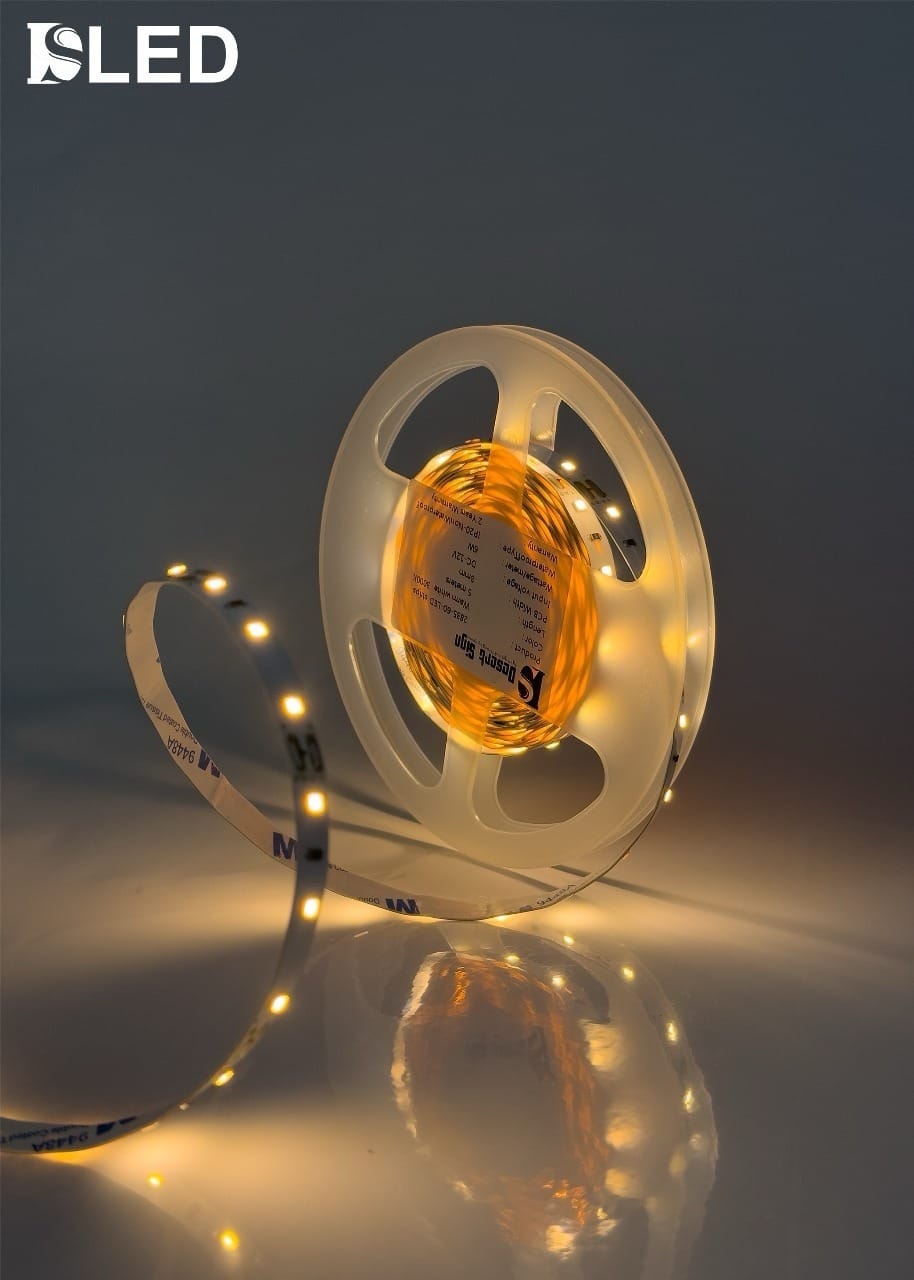
Straight LED Flexible Strip 5050
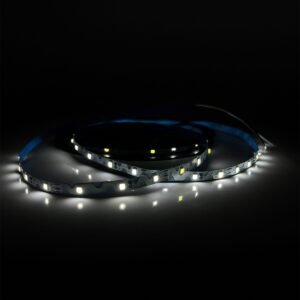
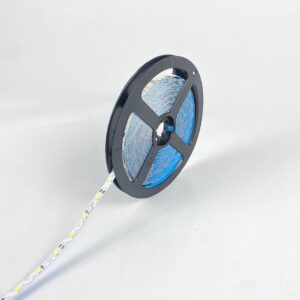
A Straight LED Flexible Strip 5050 is a versatile linear lighting solution designed for applications that require flexible installation, strong illumination, and a clean straight-line configuration. Using SMD 5050 LED technology, this type of LED strip can be used for commercial signage, architectural lighting, retail displays, exhibition stands, decorative interiors, cabinets, furniture, hospitality projects, and other customised lighting applications.
The term “5050” refers to the approximate dimensions of the LED package, while “straight” describes the strip’s conventional linear construction. The flexible PCB (Printed Circuit Board) allows the strip to be installed along straight surfaces and, within its specified bending limitations, around suitable curves and corners.
Compared with smaller LED packages, SMD 5050 LEDs are commonly associated with higher-output applications and can be configured for different lighting effects depending on the product design. Some 5050 LED strips are available as single-colour products, while others can be designed for RGB or colour-changing applications.
For businesses in Saudi Arabia, including sign manufacturers, advertising companies, lighting contractors, interior designers, architects, exhibition contractors, retailers, and hospitality businesses, understanding the construction and application of a 5050 LED flexible strip can help ensure the right product is selected for each project.
What Is an SMD 5050 LED Flexible Strip?
An SMD 5050 LED flexible strip consists of surface-mounted LEDs installed along a flexible printed circuit board. SMD stands for Surface-Mount Device, referring to the way electronic components are mounted directly onto the PCB.
The 5050 LED package is approximately 5.0 mm × 5.0 mm in size. The larger package allows different internal LED configurations depending on the product design. For example, some 5050 products are manufactured for single-colour illumination, while RGB versions can contain multiple colour channels within each LED package.
The strip itself normally includes a series of LEDs, resistors or other electrical components, conductive copper tracks, and a flexible PCB. Depending on the application, the strip may also be supplied with protective coatings or encapsulation for greater environmental resistance.
The exact brightness, power consumption, LED density, voltage, colour temperature, IP rating, and maximum run length vary by product. Therefore, technical specifications should always be checked before installation.
Why 5050 LED Technology Is Used for High-Impact Lighting
The SMD 5050 format is widely recognised in the LED lighting industry because its larger package can support configurations designed for strong and visually noticeable illumination.
This makes 5050 LED strips useful for applications where lighting needs to attract attention or provide prominent accent illumination. Depending on the product specification, they can be used in commercial signage, architectural features, entertainment areas, retail displays, exhibition structures, decorative interiors, and outdoor installations.
A 5050 strip should not automatically be considered brighter than every other LED strip. Actual performance depends on factors such as LED density, electrical configuration, LED efficiency, power consumption, optics, PCB construction, thermal management, and product quality.
For professional lighting projects, it is therefore better to compare the complete technical specification rather than selecting a strip solely because it uses the 5050 package.
Straight LED Strip for Signage and Channel Letters
One of the major applications for straight LED flexible strips is signage illumination. Sign manufacturers can use flexible LED strips inside channel letters, illuminated logos, advertising signs, light boxes, display structures, and branded installations.
A straight configuration can be particularly convenient when the illuminated surface has a simple linear or rectangular layout. It can also be positioned in parallel rows inside deeper signs where consistent spacing is required.
The final illumination depends on the sign’s dimensions, depth, face material, internal reflectivity, LED spacing, and distance between the LED source and the illuminated surface.
For channel letters, installers should avoid excessive bending or sharp folds that could damage the PCB or electronic components. The product’s specified cutting points and bending limitations should always be followed.
Architectural Lighting Applications
Modern architectural design increasingly incorporates linear LED lighting to highlight building elements, interior details, ceilings, walls, furniture, and decorative structures.
A Straight LED Flexible Strip 5050 can be used for accent lighting where a stronger visual presence is required. Suitable installations may include:
- Cove lighting
- Ceiling details
- Wall features
- Architectural edges
- Staircase accents
- Furniture illumination
- Display structures
- Decorative panels
- Reception counters
- Hospitality interiors
An aluminium LED profile can be used in many architectural applications to provide a neat mounting channel and help manage heat. A diffuser can also be added where a softer and more uniform appearance is required.
For concealed installations, designers should consider accessibility for maintenance before closing the LED strip inside architectural structures.
Retail Stores and Commercial Displays
Lighting can significantly influence the visual presentation of retail products and branded environments. A 5050 LED flexible strip can be integrated into shelving, cabinets, counters, display units, signage, and decorative structures.
In retail environments, the lighting should be selected according to the purpose of the installation. Accent lighting may require different characteristics from general illumination or product lighting.
For fashion, furniture, electronics, lifestyle, and showroom environments, designers should consider colour consistency and, where relevant, CRI (Colour Rendering Index).
A suitable LED strip can help highlight products and create visual boundaries around displays. However, excessive brightness or poorly positioned LEDs can create glare, hotspots, or unwanted reflections.
Professional retail lighting therefore requires attention to both the LED product and the surrounding environment.
LED 5050 Strip for Exhibition Stands
Exhibition stands depend on strong visual branding to attract visitors. LED flexible strips can be integrated into counters, walls, logos, product displays, shelves, arches, and architectural features.
A 5050 LED strip can be useful when a more prominent decorative or accent-lighting effect is required. It can complement other exhibition technologies such as LED display screens, digital signage, illuminated graphics, light boxes, backlit fabric, and branded structures.
Saudi Arabia has an expanding exhibition and events sector, with major business activity in Riyadh and Jeddah. Exhibition contractors often need flexible lighting products that can be incorporated into temporary structures and dismantled after an event.
For temporary projects, cable management, electrical safety, installation time, power accessibility, and transportation should be considered from the beginning of the stand design.
RGB and Colour-Changing 5050 LED Strips
One important application of the 5050 LED package is RGB lighting. RGB stands for Red, Green, and Blue, the three colour channels commonly combined to create different lighting colours.
Where the specific product is an RGB version, it may be connected to a compatible LED controller that allows users to adjust colours, brightness, lighting effects, and patterns.
RGB 5050 strips can be useful for entertainment venues, exhibitions, retail displays, hospitality spaces, event decorations, architectural features, gaming environments, and branded installations.
However, not every 5050 strip is RGB. Some products are designed for a single colour such as warm white, neutral white, or cool white. Buyers should confirm the product configuration before purchasing.
For RGB systems, the compatibility between the LED strip, controller, power supply, connectors, and wiring is particularly important.
Warm White, Neutral White and Cool White Options
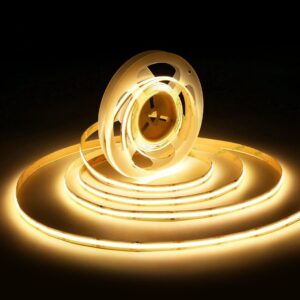
LED flexible strips are available in different colour temperatures and colour configurations. White-light versions may include warm white, neutral white, or cool white depending on the product.
Warm white is commonly selected for hospitality, decorative interiors, restaurants, hotels, residential areas, and environments where a softer atmosphere is preferred.
Neutral white can provide a balanced appearance and may be suitable for offices, commercial interiors, retail environments, and general-purpose applications.
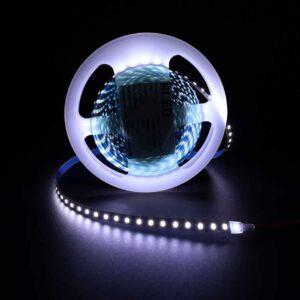
Cool white provides a crisper visual appearance and is frequently considered for signage, commercial displays, workshops, modern interiors, and applications where a bright white appearance is desired.
The appropriate choice depends on the design objective, surrounding materials, branding, existing lighting, and desired visual atmosphere.
Understanding LED Density
LED density refers to the number of LEDs installed along a specific length of strip. It can influence brightness, power consumption, heat generation, and the uniformity of the lighting effect.
A higher-density strip may produce a more continuous appearance, particularly when installed inside a shallow profile or close to a diffuser. However, higher density can also increase the electrical load and thermal requirements.
For signage applications, LED spacing should be considered alongside the depth of the letter or light box. If LEDs are positioned too far from the illuminated surface, shadows or dark areas may appear. If they are positioned too close, hotspots can become visible.
The correct density therefore depends on the application rather than simply choosing the highest available LED count.
Power Supply and Electrical Planning
A Straight LED Flexible Strip 5050 requires a compatible LED power supply or LED driver according to its specified electrical characteristics.
Before installation, the total strip length and power consumption should be calculated. The power supply should provide sufficient capacity for the connected load while remaining compatible with the strip’s specified voltage.
For longer installations, voltage drop is an important consideration. Electrical resistance in long runs can result in reduced voltage toward the end of the strip, potentially causing uneven brightness.
Professional installations may require multiple power injection points, separate circuits, suitable cable sizes, or segmented runs depending on the product specifications.
The exact electrical configuration should always be determined using the manufacturer’s datasheet.
Heat Dissipation and Thermal Management
LEDs generate heat during operation, and thermal management can influence long-term performance. The flexible PCB, LED density, power consumption, installation surface, and surrounding environment all contribute to heat behaviour.
For higher-output 5050 LED strips, heat management may be particularly important. Depending on the installation, an aluminium profile or thermally suitable mounting surface can help transfer heat away from the strip.
Installers should avoid placing the strip in an enclosed area where heat cannot escape unless the product has specifically been designed for that installation.
Thermal considerations are especially relevant for commercial projects where the lighting may operate for extended periods each day.
Waterproof and Outdoor 5050 LED Strip Applications
Some 5050 LED flexible strips are available with additional protection for outdoor or moisture-prone environments. The appropriate product should be selected based on the actual conditions of the installation.
The IP rating is an important specification because it indicates the product’s resistance to solid particles and water under defined testing conditions.
Outdoor applications may include building signage, storefronts, architectural accents, landscape features, covered terraces, hospitality environments, and advertising installations.
However, an LED strip’s IP protection does not automatically protect the entire lighting system. Connectors, cut ends, cable joints, controllers, and power supplies also require appropriate installation and environmental protection.
Straight LED Strip for Saudi Arabia
Saudi Arabia offers a large market for commercial signage, retail development, hospitality, architecture, exhibitions, and advertising. Flexible LED lighting can support many of these applications.
Projects in Riyadh, Jeddah, Dammam, Khobar, Mecca, and Medina may require different lighting solutions depending on whether the installation is indoors, outdoors, partially protected, or exposed to environmental conditions.
Saudi climate considerations can include high temperatures, dust, sunlight, humidity, and occasional moisture depending on the location.
For outdoor installations, businesses should therefore review the product’s operating temperature, IP protection, heat dissipation, UV exposure, mounting method, and maintenance requirements.
Coastal areas such as Jeddah and Khobar may also require consideration of humidity and environmental exposure, while projects in Riyadh may require particular attention to heat and dust.
LED Strip Applications in Riyadh
Riyadh is a major centre for commercial development, retail, hospitality, corporate offices, exhibitions, entertainment, and construction. These sectors create numerous applications for flexible LED lighting.
A 5050 LED strip may be used in illuminated signs, retail stores, restaurants, exhibition booths, showrooms, architectural features, reception areas, entertainment venues, and commercial displays.
For permanent installations, businesses should prioritise reliable electrical design, thermal management, maintenance access, and suitable environmental protection.
For temporary exhibition projects, portability and installation efficiency may have greater importance.
LED Strip Applications in Jeddah and Western Saudi Arabia
Jeddah’s retail, hospitality, commercial, architectural, and entertainment sectors provide another important application market for flexible LED technology.
LED strips can be incorporated into storefront signage, restaurants, hotels, retail displays, exhibition structures, decorative architecture, and branded commercial interiors.
Because Jeddah has a coastal environment, outdoor installations should be assessed carefully for humidity, moisture, dust, heat, and other environmental factors.
Selecting the appropriate IP-rated product and protecting electrical connections can contribute to a more dependable outdoor lighting system.
Dammam and Khobar Commercial Lighting Applications
The Eastern Province, including Dammam and Khobar, has significant commercial, industrial, retail, hospitality, and corporate activity.
Flexible LED strips can support signage, showroom lighting, architectural accents, display structures, reception areas, and branded commercial environments.
For industrial or semi-outdoor applications, environmental protection and temperature requirements should be evaluated carefully. The LED strip should be selected according to the actual operating conditions rather than simply its marketing description.
Using LED Profiles for a Professional Finish
An LED aluminium profile can improve both the appearance and installation of flexible LED strips. Profiles are available in different shapes and sizes for recessed, surface-mounted, corner, and other installation methods.
A profile can provide a defined mounting channel and may assist with heat management. A diffuser can also soften the light and reduce the visibility of individual LEDs.
For architectural projects, the profile can help create a cleaner linear appearance. For retail displays and furniture, it can provide additional mechanical protection and a finished appearance.
The appropriate profile should be selected based on the strip dimensions, installation location, heat requirements, diffuser type, and desired visual result.
Maintenance and Installation Best Practices
Correct installation is essential for achieving reliable LED performance. Before installation, the mounting surface should be clean, dry, and suitable for the chosen mounting method.
The strip should be cut only at designated cutting points. Excessive bending, twisting, crushing, or pulling should be avoided.
Electrical connections should be properly secured, and the power supply should remain accessible for inspection or replacement where practical.
For outdoor systems, waterproof connectors and suitable sealing methods should be used where required by the installation environment.
Routine inspection can help identify damaged sections, loose connections, moisture penetration, power supply problems, or other issues before they affect the entire lighting system.
How to Select the Right Straight LED Flexible Strip 5050
Choosing the right product requires matching the LED strip specification to the application.
Consider the following factors:
LED package: Confirm that SMD 5050 technology is appropriate for the required lighting performance.
Colour: Select the required single-colour, white-light, or RGB configuration.
Colour temperature: For white lighting, choose the appropriate warm, neutral, or cool white specification.
LED density: Consider brightness and uniformity requirements.
Voltage: Confirm compatibility with the power supply.
Power consumption: Calculate the total load based on the required length.
IP rating: Select appropriate environmental protection for the installation.
Bending capability: Follow the manufacturer’s bending limitations.
Maximum run length: Check the recommended continuous installation length.
Heat management: Consider an aluminium profile or suitable mounting surface where appropriate.
Controller: RGB or colour-changing products require compatible control equipment.
Installation environment: Evaluate temperature, dust, moisture, sunlight, and maintenance access.
Frequently Asked Questions
What is a Straight LED Flexible Strip 5050?
A Straight LED Flexible Strip 5050 is a flexible linear lighting product that uses SMD 5050 LED packages on a flexible PCB. It can be used for signage, architectural lighting, retail displays, exhibitions, decorative lighting, and other commercial applications.
What does 5050 mean in LED lighting?
The number 5050 refers approximately to the physical dimensions of the SMD LED package, which is around 5.0 mm by 5.0 mm.
Is every 5050 LED strip RGB?
No. 5050 LED strips can be manufactured in single-colour and RGB configurations. The product specification should be checked to determine whether it supports colour-changing operation.
Can a 5050 LED strip be used outdoors?
Some 5050 LED strips are designed for outdoor applications, while others are intended for indoor use. Outdoor suitability depends on the product’s construction and IP rating.
Does a 5050 LED strip require a power supply?
Yes. The LED strip needs a compatible power supply based on its specified voltage and electrical requirements.
Can 5050 LED strips be used for signage?
Yes. They can be used for suitable channel letters, illuminated logos, light boxes, advertising displays, and other signage applications when the strip specification matches the sign design.
Why is voltage drop important?
Voltage drop can occur over longer electrical runs and may result in reduced brightness or uneven illumination. Proper electrical planning can help minimise this issue.
Can an aluminium profile be used with 5050 LED strips?
Yes, where the profile dimensions and installation requirements are compatible. Aluminium profiles can provide a cleaner mounting solution and may assist with heat dissipation.
Conclusion
The Straight LED Flexible Strip 5050 is a versatile lighting solution for signage, architectural features, retail displays, exhibition stands, hospitality environments, decorative interiors, and custom commercial lighting. Its SMD 5050 LED package can support applications requiring noticeable illumination, while the flexible PCB allows the product to be integrated into a variety of designs.
Successful installation depends on more than selecting an LED package. LED density, colour temperature, voltage, power consumption, power supply, voltage drop, IP rating, bending limitations, heat dissipation, mounting method, and environmental conditions should all be considered.
For projects in Saudi Arabia, environmental factors such as high temperatures, dust, humidity, sunlight, and outdoor exposure can influence product selection. Applications in Riyadh, Jeddah, Dammam, Khobar, Mecca, and Medina may require different installation approaches depending on the project environment.
For businesses seeking additional flexible lighting products, a suitable protective or diffusing solution may also be considered, such as the Silicon Strip 3mm 12mmx250m, depending on the intended installation and design requirements.
When the product specification is correctly matched to the application, a 5050 flexible LED strip can provide an adaptable and visually effective lighting solution for signage, architecture, retail, exhibitions, hospitality, and commercial projects across Saudi Arabia.