
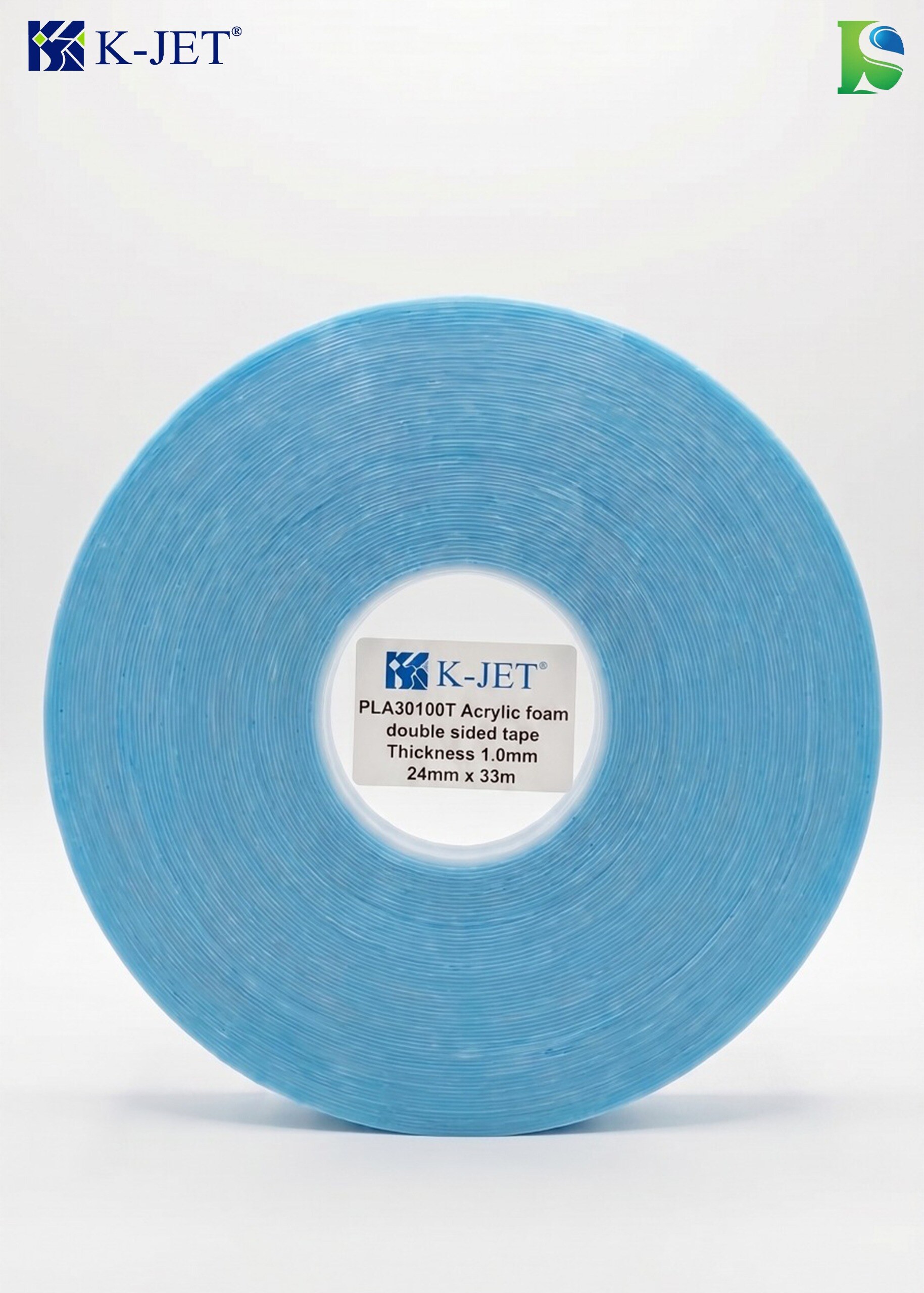
Description
Double Sided Foam Tape for Signage, Displays & Fabrication in Saudi Arabia
Double sided foam tape is a pressure-sensitive adhesive material used to bond two surfaces without visible screws, rivets, nails, or mechanical fasteners. Its foam carrier creates a small amount of cushioning while the adhesive layers provide a secure bond between compatible materials. In signage, retail displays, exhibition stands, interior branding, fabrication, and commercial installations, it can provide a clean and practical alternative to traditional fixing methods.
For sign makers and fabricators in Saudi Arabia, choosing the right foam tape involves more than simply selecting a strong adhesive. Surface condition, material type, temperature, humidity, tape thickness, application pressure, and the weight of the component can all affect the final result.
What Is Double Sided Foam Tape?
Double sided foam tape consists of a foam carrier coated with adhesive on both sides. The foam can help compensate for minor surface irregularities while maintaining contact between the two materials being joined. A release liner protects the adhesive until the tape is ready for application.
Depending on the product construction, foam tapes may use different carrier materials and adhesive technologies. Common considerations include foam density, thickness, adhesive type, temperature resistance, flexibility, and suitability for indoor or outdoor applications.
This makes foam tape useful for applications where a neat appearance is important. Instead of drilling through an acrylic panel or visible sign face, fabricators can use an adhesive bonding method when the materials and load requirements are suitable.
How Does Double Sided Foam Tape Work?
The adhesive on both sides creates a bonding interface between two surfaces. When the tape is applied, pressure helps the adhesive make closer contact with the surfaces. The foam carrier remains between them, providing thickness and some ability to accommodate small variations.
Proper surface preparation is one of the most important factors in achieving a reliable bond. Dust, oil, grease, moisture, loose particles, and other contaminants can reduce adhesive contact.
The bonding process is therefore influenced by several factors, including surface energy, cleanliness, contact area, pressure, temperature, and the amount of time allowed for the adhesive to develop its bond.
For professional fabrication, tape should be selected according to the actual application rather than simply choosing the thickest or strongest-looking product.
Why Is Foam Tape Used in Signage?
Signage fabrication often requires components to be attached without creating visible fixing points. Double sided foam tape can help achieve a cleaner finished appearance on suitable applications.
It may be used to attach lightweight decorative elements, acrylic components, PVC foam board pieces, printed panels, lettering, mounting accessories, and other compatible sign components. It can also be useful during fabrication when a temporary or supplementary fixing method is required.
In illuminated signage, adhesive tape can sometimes be used for components associated with channel letters, light boxes, LED displays, and backlit structures. However, the tape should not automatically be treated as a substitute for mechanical fixing on heavy, safety-critical, or high-wind installations.
The correct fixing method depends on the size, weight, substrate, location, exposure, and engineering requirements of the sign.
Double Sided Foam Tape for Acrylic Signage
Acrylic sheet is widely used in illuminated signs, display panels, dimensional lettering, retail branding, and interior signage. Because acrylic can provide a smooth and visually clean surface, fabricators often want fixing methods that do not interfere with its appearance.
Foam tape can be suitable for certain acrylic-to-compatible-substrate applications when the adhesive has been tested for the specific materials.
Before application, the acrylic surface should be clean and free from dust, grease, protective-film residue, and other contaminants. The tape should be applied evenly without excessive stretching.
When the finished component is exposed to direct sunlight or significant temperature changes, the adhesive’s environmental rating should be checked before installation.
Using Foam Tape With PVC Foam Board and Foamex
PVC foam board, commonly known by trade names such as Foamex or Forex in signage and display industries, is frequently used for printed graphics, promotional panels, exhibition graphics, POS displays, and indoor branding.
Double sided foam tape can provide a practical mounting method for lightweight PVC foam board components. Its foam structure can help accommodate minor variations between surfaces, which can be useful when mounting boards onto suitable smooth substrates.
For larger panels, however, fabricators should consider the total weight and surface area. A tape that works well for a small display element may not be appropriate for a large wall panel.
The substrate should also be inspected for dust, paint quality, powdery surfaces, moisture, or other conditions that could weaken adhesion.
Foam Tape for Aluminium and Composite Panels
Aluminium and aluminium composite panels are common in commercial signage, shopfront branding, architectural graphics, wayfinding systems, and fabricated sign structures.
Foam tape can be used for selected bonding and mounting applications involving aluminium or compatible coated surfaces. The adhesive must be compatible with the specific finish because painted, powder-coated, anodized, and bare aluminium surfaces can behave differently.
For outdoor projects in Saudi Arabia, the installation environment deserves particular attention. Strong sunlight, high temperatures, dust, and repeated thermal expansion and contraction can place additional demands on adhesive bonds.
Professional installers should therefore verify the manufacturer’s recommended temperature range and substrate compatibility before using foam tape on permanent exterior signage.
Double Sided Foam Tape for Channel Letters
Channel letters are commonly fabricated using materials such as aluminium, acrylic, stainless steel, PVC, and other sign-making components. Depending on the construction, foam tape can be used for selected assembly or mounting tasks.
For example, lightweight components may be bonded to compatible surfaces where a clean appearance is required. Foam tape can also complement other fixing techniques during fabrication.
However, the tape’s load capacity should always be considered. Large channel letters, heavy metal components, high-level signs, and exterior installations may require mechanical fasteners, brackets, studs, or engineered mounting systems.
The role of adhesive tape should be determined by the design and installation requirements rather than assuming that a strong adhesive alone can support every type of sign.
Foam Tape for Retail Displays and POS Graphics
Retail environments require displays that look clean and professionally installed. Point-of-sale displays, promotional boards, acrylic holders, product information panels, shelf graphics, and branded elements can sometimes benefit from concealed adhesive mounting.
Foam tape can reduce the need for visible screws and brackets, helping maintain a neat presentation. This is particularly useful when the display itself is part of the customer’s visual experience.
Retail installations can also involve frequent changes. If a display is intended to be removed or replaced regularly, the installer should consider whether a permanent high-bond tape is appropriate. Removing strong adhesive from painted walls, laminated surfaces, acrylic, or finished furniture can cause damage.
Foam Tape for Exhibition Stands
Exhibition stands require efficient fabrication and installation because contractors often have limited time to assemble and dismantle displays.
Foam tape can be useful for lightweight decorative panels, branding elements, graphics, display accessories, and selected temporary structures where the substrate and adhesive are compatible.
Saudi exhibition venues such as the Riyadh International Convention & Exhibition Center, Riyadh Front Exhibition & Conference Center, and Jeddah Superdome host commercial events where brands use custom-built booths, promotional displays, illuminated graphics, and branded architectural elements.
For exhibition contractors, adhesive tape can simplify certain finishing tasks while helping avoid visible mechanical fixings. The tape should still be selected according to whether the installation is temporary, semi-permanent, or intended for repeated reuse.
Surface Preparation Before Applying Foam Tape
Surface preparation can have a major effect on adhesive performance. Even a high-quality tape may fail if it is applied to a contaminated or unsuitable surface.
The surface should normally be dry, clean, stable, and free from loose material. Dust and oil should be removed, while painted surfaces should be checked to ensure the paint itself is firmly bonded.
A smooth surface is not automatically a good adhesive surface. Some smooth materials may have low surface energy or contain coatings that make bonding more difficult.
Installers should also consider whether the surface is porous. Highly porous materials may require a different bonding approach or surface treatment.
Testing a small area before large-scale installation can help identify compatibility problems before significant material or labour costs are involved.
Does Foam Tape Work in Hot Saudi Weather?
Saudi Arabia presents demanding environmental conditions for many outdoor signage and fabrication materials. Riyadh, Jeddah, Dammam, Khobar, and other commercial areas experience high temperatures during parts of the year, while coastal locations can also introduce humidity and salt-laden air.
Temperature affects adhesive behavior. A tape that performs well in a controlled indoor environment may behave differently when exposed to high heat, direct solar radiation, or large temperature changes.
For exterior signage, installers should check the manufacturer’s technical data for operating temperature, application temperature, outdoor suitability, UV exposure, moisture resistance, and recommended substrates.
This is particularly important for signs installed on exposed façades, rooftops, shopfronts, roadside structures, and other locations where the adhesive is subjected to the environment.
Choosing the Right Foam Tape Thickness
Foam tape is available in different thicknesses, and thickness can influence how the tape performs.
A thinner tape may be suitable when the two surfaces are already relatively flat and close together. A thicker foam carrier can provide greater ability to accommodate minor irregularities or create additional separation between components.
However, thicker does not automatically mean better.
The correct thickness depends on the materials being bonded, surface condition, required appearance, movement between substrates, load, and installation environment.
For signage fabrication, the tape should provide sufficient contact without creating an unwanted visible gap or changing the alignment of the finished component.
What Affects Foam Tape Adhesion?
Several factors can influence the strength and durability of an adhesive bond.
Surface cleanliness is one of the first considerations. Dust, oil, grease, moisture, and fingerprints can interfere with adhesion. Application pressure also matters because proper pressure helps bring the adhesive into contact with the substrate.
Temperature is another important factor. Very cold conditions can make some adhesives less responsive during application, while excessive heat can affect performance depending on the adhesive formulation.
The size of the bonding area also matters. A larger surface area generally provides more opportunity for adhesive contact, but the tape must still be suitable for the expected load.
The direction of the load should also be considered. A vertical load, pulling force, peeling force, and shear force can place different demands on an adhesive joint.
Common Mistakes When Using Double Sided Foam Tape
One common mistake is applying tape to a dirty surface. Even a small amount of dust can reduce the effective contact area.
Another problem is applying tape to a surface that is damp or exposed to condensation. Moisture can interfere with bonding and may contribute to premature failure.
Installers may also underestimate the importance of application pressure. Simply placing tape on a surface and immediately loading the component may not provide the same result as applying it correctly and allowing the adhesive to develop its bond.
Using an unsuitable tape for outdoor signage is another frequent issue. Indoor display tape should not automatically be assumed to be suitable for façades or exposed signs.
Finally, relying exclusively on adhesive tape for heavy or safety-critical components can create unnecessary risk. Mechanical fixing or an engineered mounting solution may be required.
How to Apply Double Sided Foam Tape Correctly
The basic application process begins with checking the surfaces and confirming material compatibility. Both surfaces should be prepared according to the adhesive manufacturer’s recommendations.
Measure and cut the required tape length before removing the release liner. Apply the tape without excessive stretching and press it firmly onto the first surface.
After positioning the second component, apply suitable pressure across the bonded area. Avoid repeatedly removing and repositioning the tape because this can compromise the adhesive interface.
Where the application requires significant load-bearing performance, follow the manufacturer’s recommended bonding and curing conditions rather than relying on immediate adhesion alone.
For large signage projects, testing a sample assembly before production can be an effective way to confirm the chosen tape and substrates work together.
Indoor and Outdoor Applications
Indoor applications generally provide more controlled environmental conditions, making foam tape suitable for a broader range of lightweight mounting and display tasks.
Outdoor applications require more careful selection. UV exposure, heat, humidity, rain, dust, substrate movement, and thermal expansion can affect long-term performance.
A tape suitable for an indoor retail display may therefore not be suitable for an exterior illuminated sign.
For projects across Saudi Arabia, the intended installation location should be discussed before selecting the tape. A shop interior in Riyadh has different environmental requirements from an exposed sign installed near the coast in Jeddah or Dammam.
Double Sided Foam Tape for Commercial Projects in Saudi Arabia
Saudi Arabia’s expanding retail, hospitality, commercial, entertainment, exhibition, and construction sectors create demand for professional signage and display fabrication.
Riyadh has extensive commercial activity around areas such as Al Olaya, King Fahd Road, Al Malaz, Al Nakheel, and the Diplomatic Quarter. Jeddah, Dammam, and Khobar also have significant requirements for retail branding, corporate signage, exhibition displays, and commercial fit-outs.
In these environments, adhesive products are often one part of a larger fabrication system that can include acrylic sheets, aluminium profiles, PVC foam board, LED modules, power supplies, printed graphics, silicone components, and mechanical fixing hardware.
Selecting compatible materials as a complete system can help fabricators achieve more consistent results.
How Much Double Sided Foam Tape Do You Need?
Tape quantity depends on the size and shape of the component, the number of pieces being installed, and the manufacturer’s application recommendations.
Instead of estimating only from the total surface area, fabricators should consider where the tape will be positioned and how the load will be distributed.
For signs and displays, the tape should generally be applied in a planned pattern rather than randomly. Edges, corners, narrow components, and large flat panels may require different layouts.
Allowing some additional material for cutting, positioning, fabrication errors, and installation adjustments can also help prevent delays on a project.
Storage and Handling of Foam Tape
Adhesive tape should be stored according to the manufacturer’s recommendations. Excessive heat, direct sunlight, moisture, dust, and unsuitable storage conditions can affect the material before it is even installed.
Keeping rolls clean and protected helps prevent contamination of the adhesive surface. The release liner should remain in place until the tape is ready to be applied.
For professional signage workshops, organized storage is especially useful when multiple adhesive products are being used for acrylic, PVC, aluminium, LED signage, exhibition displays, and other fabrication tasks.
Where to Buy Double Sided Foam Tape in Saudi Arabia
Sign makers, advertising companies, exhibition contractors, digital printing businesses, retail display fabricators, and maintenance teams can select Double-Sided Foam Tape according to their project requirements.
Before purchasing, consider the substrate materials, tape thickness, adhesive type, expected load, indoor or outdoor location, temperature exposure, required bonding area, and installation method.
For professional projects, product documentation and technical specifications should be checked rather than selecting a tape based only on appearance or general strength claims.
Frequently Asked Questions
What is double sided foam tape used for?
Double sided foam tape is used to bond compatible materials where a concealed adhesive fixing is preferred. Common applications include signage fabrication, acrylic displays, retail graphics, exhibition stands, POS displays, decorative panels, and selected lightweight mounting applications.
Can double sided foam tape be used outdoors?
Some foam tapes are designed for outdoor use, while others are intended primarily for indoor applications. Outdoor suitability depends on the adhesive formulation, substrate, temperature range, UV exposure, moisture resistance, and expected load.
Can foam tape stick to acrylic?
It can work with acrylic when the adhesive is compatible with the acrylic surface and the application conditions. Surface preparation and testing are recommended, especially for permanent or outdoor installations.
Is foam tape suitable for LED signs?
Foam tape can be used for selected components of LED signs, including certain lightweight mounting and fabrication tasks. Heavy or structural components may require mechanical fixing or an engineered mounting system.
Can foam tape be used on aluminium?
Many foam tapes can bond to suitable aluminium surfaces, but compatibility depends on whether the surface is bare, painted, powder-coated, anodized, or otherwise finished. Testing and manufacturer guidance are recommended.
How long does double sided foam tape last?
Service life depends on the tape construction, adhesive, substrate, environmental exposure, load, installation quality, and application. Indoor applications can have very different service conditions from exposed outdoor signage.
Does thicker foam tape provide a stronger bond?
Not necessarily. Thickness affects the tape’s ability to accommodate surface irregularities and maintain a particular gap, but overall performance depends on the complete adhesive and foam construction as well as the application.
Final Considerations for Sign Makers and Fabricators
Double sided foam tape is a useful component in modern signage, retail display, exhibition, interior branding, and fabrication work. Its concealed appearance, cushioning effect, and convenient application can make it valuable when compatible materials need to be joined without visible mechanical fasteners.
The most reliable results come from treating adhesive tape as an engineered component rather than a simple accessory. Surface preparation, substrate compatibility, temperature, moisture, UV exposure, load direction, tape thickness, bonding area, and installation technique all deserve consideration.
For projects in Riyadh, Jeddah, Dammam, Khobar, and other Saudi commercial markets, selecting a tape according to the actual environment and application can help reduce installation problems and improve the durability of finished signage and displays.