Description
DSMEDIA 510gsm Whiteback Frontlit Banner: A Practical Guide for Large-Format Printing in Saudi Arabia
Large-format banners are widely used for advertising, construction branding, retail promotions, exhibitions, events, and commercial communication. Choosing the right banner material can influence print quality, visual appearance, handling, installation, and performance in different environments. DSMEDIA 510gsm Whiteback Frontlit Banner is a heavier banner material designed for applications where a substantial PVC banner construction and a clean white printable surface are required.
For sign makers, printing companies, advertising agencies, retailers, property developers, and exhibition contractors in Saudi Arabia, understanding the characteristics and practical uses of a 510gsm whiteback frontlit banner can make material selection easier.
What Is DSMEDIA 510gsm Whiteback Frontlit Banner?
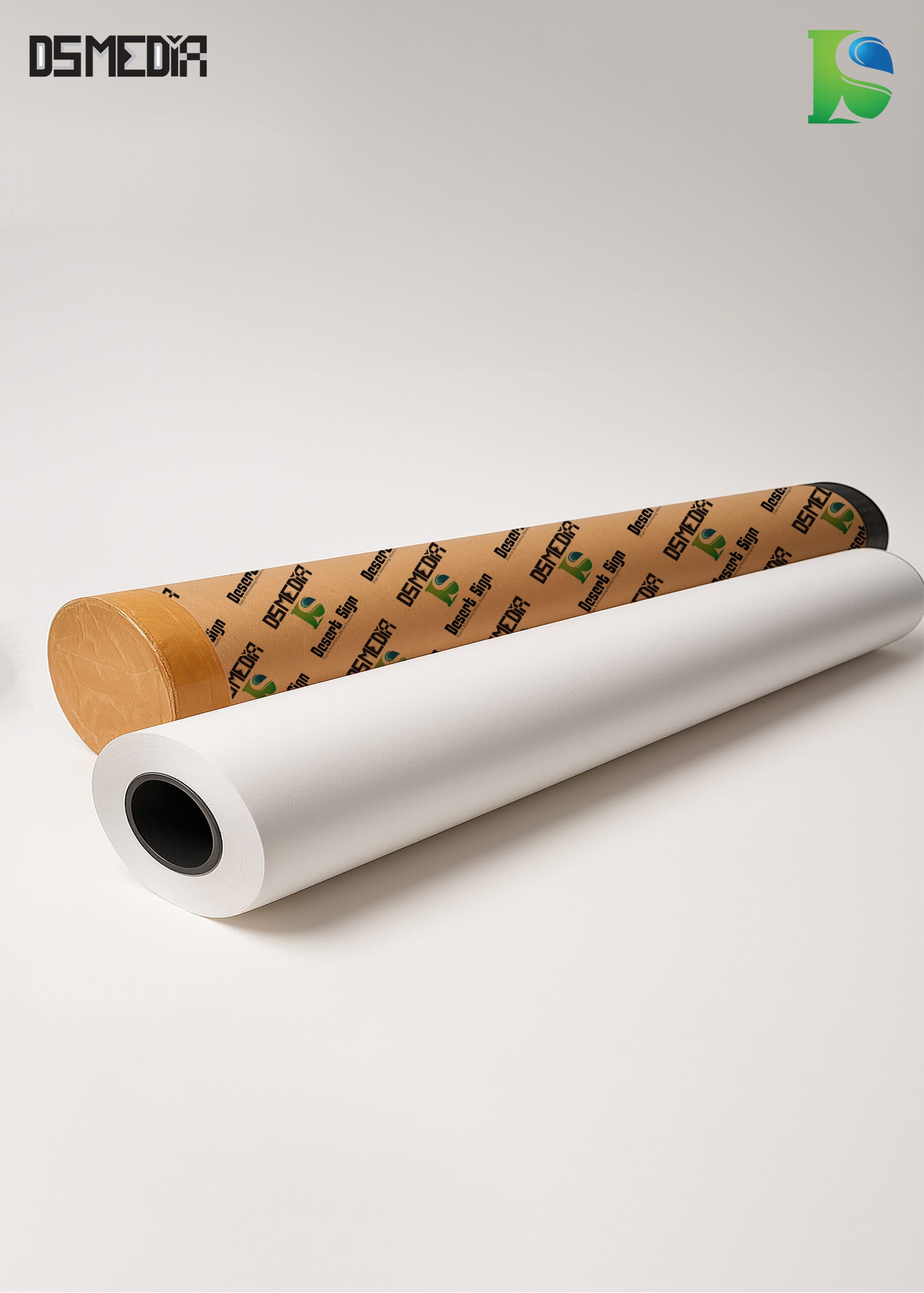
DSMEDIA 510gsm Whiteback Frontlit Banner is a PVC-based banner material with a white rear surface and a printable front face intended for front illumination or normal ambient viewing. The 510gsm specification refers to the approximate weight of the material per square metre.
Its whiteback construction provides a clean reverse surface, while the printable face is suitable for large-format digital graphics when compatible printing equipment, inks, and production settings are used. The heavier material weight can also provide a more substantial feel compared with lighter banner grades.
The exact outdoor durability, ink compatibility, tensile strength, and recommended exposure period should always be confirmed with the product’s technical documentation before specifying the material for a demanding installation.
Why Choose a 510gsm Banner?
Material weight is an important consideration when producing large advertising graphics. A 510gsm banner offers a heavier construction that can be suitable for substantial commercial displays, especially where the finished graphic needs to be handled, transported, finished, and installed professionally.
However, gsm should not be considered the only indicator of banner performance. The substrate construction, coating, finishing method, printing technology, environmental exposure, fixing system, and installation location all affect the final result.
For large graphics, professional finishing is particularly important because the edges and attachment points experience stress during transportation and installation.
Whiteback Construction and Print Appearance
The whiteback surface provides a clean background for printed graphics and branding. This can be useful when producing photographs, logos, promotional messages, architectural renders, product imagery, maps, directional information, and corporate graphics.
Designers should consider viewing distance when preparing artwork. Large banners are frequently viewed from several metres away, so text should have sufficient size and contrast. Important information such as telephone numbers, website addresses, QR codes, and promotional offers should remain easy to identify.
Colour management is also important during production. The printer, ink system, media profile, drying conditions, and artwork settings can all influence the final colour appearance.
Frontlit Banner for Advertising
Frontlit banners are commonly used where lighting or illumination comes from the front of the printed surface. They can also be used in normal daylight or ambient lighting without additional illumination.
This makes frontlit banner media relevant to outdoor advertising, building promotions, retail campaigns, temporary commercial signage, event branding, and promotional displays.
Large advertising graphics can communicate a message over a wide area while allowing businesses to change campaigns when required. The final installation should be planned according to the banner’s size, support structure, attachment method, and expected environmental exposure.
Construction and Real Estate Graphics
Construction companies and real estate developers often use large-format banners to promote new developments, upcoming projects, commercial properties, and residential communities.
A printed banner can display architectural visualisations, project names, developer branding, contact details, QR codes, and sales information around a construction site or marketing location.
In growing commercial areas of Riyadh, including Al Olaya, King Fahd Road, Al Malaz, and Al Nakheel, large-format graphics can be used as part of project branding and property marketing. Similar applications are common in Jeddah, Dammam, and Al Khobar, where commercial and development projects require visible outdoor communication.
Outdoor installation should account for wind, structural fixing, tension, sunlight, dust, and temperature.
Retail and Commercial Branding
Retail businesses can use whiteback frontlit banners for seasonal campaigns, store promotions, product launches, sales announcements, and temporary branding. Large graphics can be installed on walls, fences, storefront structures, promotional frames, or other suitable supports.
Shopping centres and commercial properties may also require temporary graphics for special events and marketing campaigns. The clean white print surface can support photographs and brand colours while maintaining strong visual communication.
For professional retail branding, artwork should be consistent with the company’s logo, typography, colour palette, and wider visual identity.
Exhibition and Event Applications
Saudi Arabia has a growing exhibition and events sector, making large-format printed media important for trade shows, conferences, product launches, and corporate events.
At venues such as Riyadh Front Exhibition & Conference Center and Riyadh International Convention & Exhibition Center, banners can be used for promotional walls, sponsor graphics, directional information, event branding, and supporting exhibition displays.
When banners are used indoors, designers should consider artificial lighting, viewing angles, photography, and the surrounding exhibition environment. Strong contrast and clear typography help visitors understand the message quickly.
Businesses looking for related material options can explore Frontlit white Back Banner when comparing different whiteback frontlit banner products.
Outdoor Advertising in Saudi Arabia
Saudi Arabia’s climate requires careful material selection for outdoor signage. High temperatures, strong sunlight, airborne dust, and wind can place additional demands on banners and their fixing systems.
For this reason, buyers should check the manufacturer’s recommendations for outdoor exposure, printing compatibility, expected durability, and storage. A banner suitable for a short promotional campaign may not be the same choice for a long-term building installation.
Installation quality is equally important. Large banners should be tensioned correctly and secured using an appropriate support and fastening system.
Finishing and Installation
A professionally printed banner still requires appropriate finishing. Depending on the project, finishing may include reinforced hems, eyelets, ropes, pole pockets, or other attachment solutions.
The finishing method should be selected according to how the banner will be mounted. Large outdoor graphics can experience significant wind loads, making poorly positioned eyelets, weak edges, or inadequate fixing points potential failure areas.
Before installation, the supporting structure should also be inspected for stability and suitability.
510gsm Whiteback vs Lighter Banner Materials
A 510gsm banner is heavier than many lighter PVC banner grades. A lighter material may be preferred when easy handling, transportation, or temporary installation is the priority, while a heavier grade may be considered when the project requires a more substantial banner construction.
The correct choice depends on the intended application rather than weight alone. Printing requirements, installation period, graphic dimensions, environmental conditions, and finishing requirements should all be considered.
Maintenance and Storage
Proper handling can help preserve the appearance of printed banners. Graphics should be inspected periodically, particularly when installed outdoors. Dirt, dust, loose fixings, damaged edges, and signs of tension failure should be addressed before they become larger problems.
When a banner is removed for storage, it should be cleaned appropriately, allowed to dry, and stored in a suitable manner. Avoiding unnecessary folding or rough handling can help reduce creases and surface damage.
How to Select the Right Banner for Your Project
Before ordering DSMEDIA 510gsm Whiteback Frontlit Banner, consider the final graphic size, indoor or outdoor location, expected installation period, viewing distance, printing technology, finishing requirements, lighting conditions, and mounting method.
For a professional signage project, the printer and installer should evaluate the complete application rather than selecting material based only on gsm. This approach helps ensure that the printed banner, finishing, support structure, and installation method work together.
Final Thoughts
DSMEDIA 510gsm Whiteback Frontlit Banner is a practical option for large-format printing applications requiring a substantial PVC banner construction and a clean white printable surface. It can be used for outdoor advertising, construction and real estate graphics, retail promotions, exhibitions, conferences, corporate branding, and temporary commercial displays.
Across Riyadh, Jeddah, Dammam, Al Khobar, and other Saudi markets, successful banner projects depend on more than the media itself. Correct artwork, compatible digital printing, professional finishing, secure installation, and consideration of local environmental conditions all contribute to a reliable and visually effective large-format display.
Reviews
There are no reviews yet.