Description
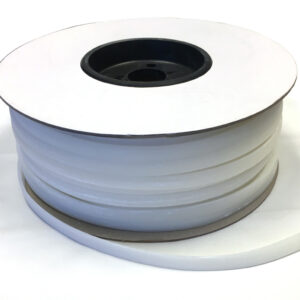
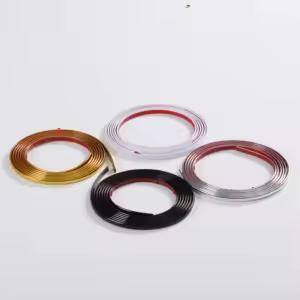
PVC Strip 3mm 12mm x 250m for Signage and LED Applications
PVC Strip 3mm 12mm x 250m is a long, narrow PVC strip designed for fabrication, signage, display construction, and applications where a flexible or easily workable strip material is required. With a 3mm thickness, 12mm width, and 250-metre roll length, this type of material can be useful for sign makers and fabricators working on repeated installations, custom displays, illuminated signage, exhibition structures, and other projects where consistent strip material is required.
PVC, or polyvinyl chloride, is widely used throughout the signage and fabrication industry because it can be processed into different forms for commercial and decorative applications. The exact use of a PVC strip depends on its formulation, flexibility, surface characteristics, colour, and the manufacturer’s technical specifications.
For professional sign makers in Saudi Arabia, having suitable strip materials available can simplify fabrication and help maintain consistency across multiple projects. This guide explains the characteristics, applications, fabrication considerations, installation factors, and purchasing considerations associated with a 3mm x 12mm x 250m PVC strip.
What Is a PVC Strip?
A PVC strip is a narrow section of polyvinyl chloride material manufactured in a continuous length. Unlike rigid PVC sheets or PVC foam boards, a strip is designed in a narrow profile that can be used for specific fabrication, finishing, separation, support, or construction requirements.
PVC is a thermoplastic polymer used in construction, electrical products, signage, packaging, interior applications, and many other industries. Depending on its formulation, PVC can be rigid, semi-flexible, or flexible.
The 3mm thickness and 12mm width provide a relatively narrow profile, while the 250-metre length makes the product suitable for projects where long continuous runs or multiple repeated sections are required.
The exact flexibility, hardness, colour, temperature resistance, chemical resistance, and other technical characteristics should be confirmed from the manufacturer’s current product documentation before selecting the material for a particular application.
Understanding the PVC Strip Dimensions
The dimensions of a material directly influence how it can be used.
A 3mm thickness provides a defined material profile while keeping the strip relatively narrow. A 12mm width provides a small working surface suitable for applications where a larger sheet or panel would be unnecessary.
The 250m roll length is particularly relevant for commercial fabrication because it provides a substantial amount of continuous material. Instead of handling many short pieces, fabricators can cut the strip to the required length for each project.
This can be useful for sign manufacturers producing multiple letters, repeated display components, retail fixtures, exhibition structures, or other fabricated elements.
Before ordering, buyers should confirm whether the stated dimensions represent the finished strip dimensions and whether the product is supplied as one continuous roll or according to the supplier’s packaging specification.
Why PVC Is Used in Sign Making
PVC is a familiar material in the signage industry because it can be manufactured and processed into many different forms.
Sign makers use PVC-based products for applications involving lettering, display components, mounting, finishing, fabrication, backing structures, and other signage requirements.
A narrow PVC strip can be useful where a project requires a consistent profile rather than a full sheet. The ability to cut the material to specific lengths can make it practical for custom fabrication.
However, the suitability of the strip depends on the actual product formulation. A PVC strip intended for indoor fabrication should not automatically be assumed to be suitable for prolonged outdoor exposure, high temperatures, or direct sunlight.
For outdoor projects in Saudi Arabia, manufacturers should verify the product’s environmental specifications before installation.
PVC Strip for LED Signage Fabrication
LED signage often requires additional materials beyond the LED modules themselves.
Channel letters, light boxes, illuminated logos, and custom displays may include aluminium, acrylic, polycarbonate, PVC components, adhesives, mounting hardware, wiring, power supplies, and other fabrication materials.
A PVC strip can potentially be incorporated into certain signage fabrication processes where a narrow, consistent material profile is required.
For example, a fabricator may need strip material for separation, backing, edging, support, positioning, or another project-specific purpose.
The exact function should be determined by the sign design and the characteristics of the particular PVC product.
The LED lighting itself should also be selected separately. A PVC strip should not be assumed to have an electrical or lighting function unless the product documentation specifically states that it is designed for such a purpose.
Channel Letter Fabrication
Channel letters are widely used for retail stores, restaurants, hotels, offices, shopping centres, showrooms, and commercial buildings.
A typical channel letter can contain a metal or plastic body, a translucent face, LED modules or another lighting system, wiring, and mounting components.
Fabricators often need narrow construction materials when forming or finishing different parts of a letter. A PVC strip can be considered where its dimensions and physical characteristics suit the particular fabrication requirement.
The narrow 12mm profile may be useful in projects where space is limited and the material needs to fit within a compact construction detail.
However, the strip should be used only where its mechanical and environmental properties are appropriate for the intended function.
Applications in Light Boxes
Light boxes are another important category of illuminated signage.
They can be found in retail stores, shopping centres, restaurants, hotels, airports, exhibitions, corporate offices, and advertising installations.
A light box generally consists of a frame or enclosure, a translucent face, an internal lighting system, and supporting or mounting components.
A PVC strip may be useful for selected fabrication or finishing requirements within such a structure, depending on the design.
For illuminated applications, the strip should not interfere with light distribution unless it is intentionally part of the optical or structural design. Designers should consider the position of the strip relative to LEDs, diffusers, acrylic faces, and internal reflective surfaces.
Combining PVC Components With LED Lighting
Modern signage frequently combines several materials.
A typical illuminated sign may use aluminium for the frame, acrylic or polycarbonate for the face, PVC components for selected fabrication details, LED modules or LED bars for illumination, and a suitable power supply for electrical operation.
When selecting a PVC strip for a project involving LEDs, it is important to distinguish between the structural or fabrication function of the PVC and the lighting function of the LED system.
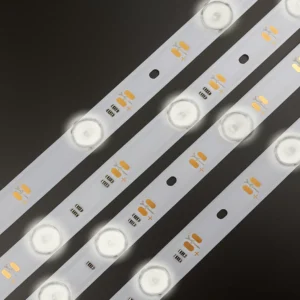
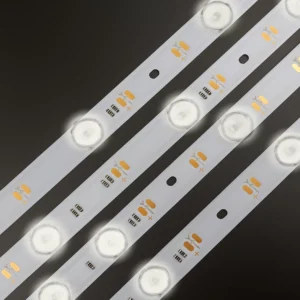
For example, a separate LED product may be required to illuminate a cabinet or light box. A suitable option to compare for linear illumination is the Backlit LED Bar Lighting Strip 3030 Cool White (1mtr).
The two materials serve different purposes, so compatibility should be evaluated according to the complete sign design.
PVC Strip for Exhibition Displays
Exhibition stands often require lightweight and easily fabricated components.
Exhibition contractors may build temporary walls, counters, product displays, illuminated logos, graphic frames, shelves, feature structures, and custom branding elements.
A long PVC strip can be useful when repeated sections need to be produced consistently across an exhibition project.
Saudi Arabia has a growing exhibition and events market, particularly in Riyadh, where venues such as Riyadh Front Exhibition & Conference Center and the Riyadh International Convention & Exhibition Center host trade shows, conferences, and industry events.
For temporary structures, material handling is particularly important. A 250-metre roll can provide enough material for multiple components without requiring frequent replacement with small individual pieces.
Retail Display and Point-of-Sale Applications
Retail displays need to balance appearance, durability, fabrication speed, and practical installation.
PVC-based materials can be incorporated into point-of-sale displays, promotional structures, product stands, shelves, graphic frames, and branded fixtures where their physical characteristics are appropriate.
A narrow strip can provide a small fabrication component without taking up the space of a larger board.
Retail environments in Riyadh, Jeddah, Dammam, Khobar, and other Saudi cities can involve frequent display changes, especially for seasonal promotions and new product launches.
For these applications, fabricators may value materials that can be cut and incorporated into repeated display designs efficiently.
PVC Strip in Custom Fabrication
Custom fabrication often involves solving small construction requirements that are difficult to address with standard sheets.
A long PVC strip can be cut into shorter sections and incorporated into custom designs according to the project’s dimensions.
This can reduce material waste compared with purchasing multiple short pieces, depending on the application.
Fabricators should still plan cutting patterns carefully. For projects involving many repeated components, calculating the required length before production can help reduce unnecessary waste.
A cutting plan should account for joints, corners, overlaps, tolerances, and potential damaged sections.
Cutting and Working With PVC Strip
The appropriate cutting method depends on the physical properties of the specific PVC strip.
For some PVC materials, standard workshop cutting tools may be appropriate. Other formulations may require specialized equipment or specific handling procedures.
Before starting a large fabrication run, it is sensible to test the selected cutting method on a small section.
The cutting process should produce clean edges without creating excessive deformation or damage.
Where heat is used during fabrication, the installer should follow the manufacturer’s safety and processing recommendations. PVC products can behave differently depending on their formulation and temperature exposure.
Adhesive and Fixing Considerations
The appropriate fixing method depends on the substrate and the intended application.
Possible methods may include mechanical fastening, compatible adhesives, clips, channels, or other fabrication techniques.
Not every adhesive is compatible with every PVC formulation. Some adhesives may provide inadequate bonding, while others may affect the material surface.
Before installing the strip permanently, fabricators should verify compatibility between the PVC, adhesive, substrate, and surrounding materials.
For outdoor signage, additional consideration should be given to temperature changes, moisture, UV exposure, and movement.
PVC Strip and Saudi Climate Conditions
Saudi Arabia presents challenging environmental conditions for many materials used outdoors.
Riyadh and other inland cities can experience high temperatures and strong sunlight. Coastal cities such as Jeddah, Dammam, and Khobar may also expose materials to humidity and salt-laden air.
These conditions make material selection particularly important.
A PVC strip intended for indoor fabrication should not automatically be installed outside. Buyers should confirm UV resistance, operating temperature, weather resistance, chemical compatibility, and other environmental properties from the product documentation.
Where the material will be installed inside an air-conditioned retail or exhibition environment, the environmental demands may be considerably different.
Using PVC Strip in Riyadh Signage Projects
Riyadh is one of Saudi Arabia’s largest commercial markets for signage, exhibitions, retail branding, corporate identity, and architectural displays.
Commercial properties around Al Olaya, King Fahd Road, Al Malaz, Al Nakheel, and other business and retail districts can require a wide range of fabricated signage components.
Sign manufacturers working on these projects may need materials in large quantities, particularly when producing multiple signs for a retail chain or corporate rollout.
A 250-metre roll can be relevant to such projects when a narrow strip is required repeatedly throughout the fabrication process.
PVC Strip Applications in Jeddah
Jeddah has a strong mix of retail, hospitality, commercial, and advertising activity.
Signage applications can include storefront signs, shopping centre displays, restaurant branding, hotel signage, exhibition structures, and promotional displays.
For coastal environments, material suitability should be checked carefully. Humidity, salt exposure, UV radiation, and temperature can affect different materials in different ways.
If a PVC strip is intended for an exterior application in Jeddah, its environmental specifications should be verified rather than relying on general assumptions about PVC.
Dammam and Khobar Commercial Applications
Dammam and Khobar serve a broad commercial and industrial market in Saudi Arabia.
Signage and display projects in these cities can include corporate offices, retail properties, restaurants, showrooms, industrial facilities, exhibition displays, and commercial developments.
A continuous PVC strip can be useful where fabricators need repeated narrow components across a project.
For industrial or outdoor applications, however, the required material performance may differ from indoor retail signage. Buyers should always match the product’s technical characteristics to the intended environment.
PVC Strip for Sign Makers and Advertising Companies
Sign makers often need access to materials that can support both standard and custom projects.
A 250-metre roll can be useful for businesses that regularly produce signage because it provides a substantial supply of the same material specification.
This can help simplify stock management when the material is used consistently across multiple jobs.
Advertising companies and fabrication workshops may also use long-roll materials when producing repeated promotional displays, retail fixtures, exhibition components, or branded structures.
Before purchasing in bulk, businesses should confirm the strip’s dimensions, packaging, storage requirements, colour, flexibility, and intended applications.
Storage and Handling
Proper storage can help protect fabrication materials before they are used.
PVC strips should be stored according to the manufacturer’s recommendations and protected from conditions that could deform, contaminate, or otherwise damage the material.
Long rolls should be handled carefully to prevent kinks, crushing, or unnecessary bending if the product is not designed for permanent deformation.
The storage area should also be suitable for the material’s environmental requirements.
For large fabrication workshops, organizing rolls by width, thickness, colour, and application can make material selection faster and reduce the chance of using the wrong product.
Reducing Material Waste
Long-roll products can offer an advantage when projects require repeated sections.
Instead of buying many short pieces, fabricators can cut the 250-metre roll according to the project’s requirements.
However, efficient use depends on planning.
Before cutting, workshops should determine the required lengths for each component and organize the cutting sequence to minimize leftover pieces.
For large signage programs, especially where the same design is being repeated across several branches, a standardized cutting plan can make material consumption more predictable.
PVC Strip and Sustainable Fabrication Practices
Material efficiency is an important part of responsible fabrication.
Using the correct quantity of material and minimizing unnecessary offcuts can reduce waste. Long rolls can potentially support more efficient cutting when the required component lengths are repeated.
Any unused PVC should be handled according to applicable local waste management and recycling requirements. PVC recycling opportunities vary according to material composition and local facilities, so fabricators should follow appropriate disposal practices.
Sustainability should also be considered across the complete signage system, including the frame, face materials, LED lighting, electrical components, and future maintenance.
How to Choose the Right PVC Strip
Before purchasing a PVC strip, buyers should confirm the requirements of the project.
Important considerations include thickness, width, roll length, flexibility, hardness, colour, substrate compatibility, environmental exposure, temperature range, UV resistance, and intended application.
For a 3mm x 12mm x 250m product, the dimensions are clearly defined, but other technical characteristics should be confirmed from the supplier or manufacturer.
If the strip is being incorporated into illuminated signage, the buyer should also consider its relationship with the LED system, sign face, electrical components, and mounting method.
Common Mistakes When Using PVC Strip
One common mistake is assuming that all PVC products have identical properties.
PVC can be formulated differently for different applications. A strip designed for one environment may not be appropriate for another.
Another mistake is using an adhesive without checking material compatibility. Adhesive failure can lead to loose components and costly repairs.
Outdoor use without confirming UV and temperature suitability is another potential issue, particularly in Saudi Arabia’s climate.
Finally, fabricators should avoid using the strip as a structural component unless its mechanical properties have been confirmed for that purpose.
Buying PVC Strip 3mm 12mm x 250m in Saudi Arabia
For Saudi sign makers, advertising companies, exhibition contractors, retail fabricators, and commercial display manufacturers, PVC Strip 3mm 12mm x 250m can provide a convenient long-roll format for applications requiring a narrow and consistent PVC profile.
Before purchasing, buyers should confirm the exact product specifications, including dimensions, material characteristics, colour, flexibility, environmental suitability, packaging, and intended applications.
For larger orders, it is also useful to consider project quantity, storage requirements, expected material consumption, and future maintenance needs.
The right product should be selected based on the actual fabrication requirement rather than simply the lowest purchase price.
Final Thoughts
PVC Strip 3mm 12mm x 250m is a long-roll PVC material that can be useful for sign makers, fabricators, exhibition contractors, retail display manufacturers, and commercial branding projects.
Its 3mm thickness, 12mm width, and 250-metre length make it particularly relevant where a narrow material profile is required repeatedly across a project.
Potential applications can include signage fabrication, channel-letter construction details, light box components, exhibition displays, retail fixtures, custom fabrication, and other project-specific uses. The exact suitability depends on the product’s formulation and technical specifications.
For projects in Riyadh, Jeddah, Dammam, Khobar, and other Saudi markets, environmental conditions should be considered carefully, particularly for outdoor applications. Combining the PVC strip with appropriate acrylic, aluminium, LED modules, LED bars, adhesives, mounting systems, and other fabrication materials can help create complete signage solutions.
Before installation, always verify the manufacturer’s current technical information and ensure that the material is suitable for its intended application, substrate, temperature, and environmental exposure.