Description
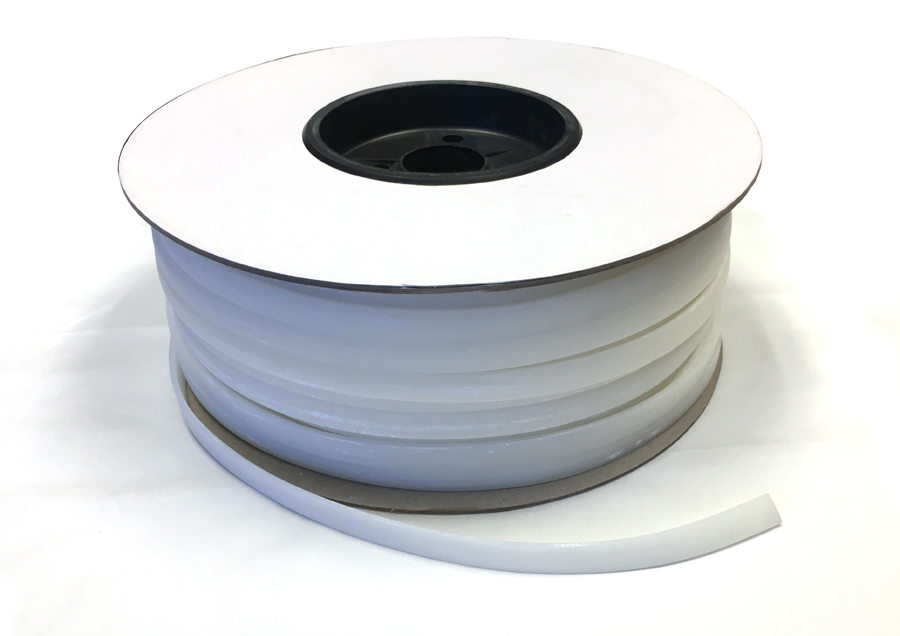
Silicon Strip 3mm 12mm x 250m for LED Signage and Sign Fabrication
A reliable sign fabrication project depends on more than the visible acrylic, aluminium or printed face. Small supporting materials can play an important role in how an illuminated sign is assembled, protected and finished. Silicon Strip 3mm 12mm x 250m is a long-roll silicone strip designed for applications where a narrow, flexible material is required during signage fabrication and installation.
With a 3mm thickness, 12mm width and 250-metre roll length, this type of strip can be useful for sign makers, LED signage manufacturers, exhibition contractors, retail display fabricators and commercial branding teams. Its flexible format allows it to be incorporated into different fabricated structures where a narrow strip is easier to handle than a rigid component.
For projects in Saudi Arabia, material selection should also consider fabrication conditions, transportation, installation environment and the demanding temperatures experienced across cities such as Riyadh, Jeddah, Dammam and Khobar.
What Is a Silicon Strip 3mm 12mm x 250m?
A silicon or silicone strip is a flexible strip material used in fabrication and finishing applications. Unlike rigid plastic sheets or aluminium profiles, a silicone strip can follow curves, edges and irregular sections of a fabricated structure.
The dimensions of this product are important for project planning. The 3mm thickness provides a relatively slim profile, the 12mm width gives the strip a narrow working surface, and the 250m roll length makes it suitable for projects requiring substantial continuous material.
For professional sign makers, buying material in a long roll can simplify production because large quantities can be stored and cut according to individual project requirements.
The exact suitability of a silicone strip should always be confirmed against the intended application, fabrication method and manufacturer’s technical information.
Why Silicone Materials Are Used in Sign Fabrication
Signage fabrication often involves curved surfaces, joints, edges, gaps and transitions between different materials. A flexible strip can provide practical advantages in situations where a rigid component would be difficult to install.
Silicone is known for flexibility and resistance to many environmental conditions, which makes silicone-based materials useful in various technical and fabrication environments. However, the actual performance of a specific strip depends on its formulation, manufacturing quality and intended use.
In illuminated signage, fabricators may encounter applications where flexible materials are required around corners, along edges or within detailed sign constructions. A narrow strip can be easier to cut, position and adapt than a large rigid component.
This makes material dimensions just as important as the material itself.
Understanding the 3mm Thickness
The 3mm thickness gives the strip a slim profile that can be useful where fabrication space is limited.
Sign structures often contain several layers, including an aluminium body, acrylic face, LED modules, wiring, backing materials and internal supports. Adding a thick component can interfere with the available space.
A 3mm strip can therefore be considered for applications where a low-profile flexible material is needed.
Before installation, fabricators should check clearances within the sign and determine whether the strip needs to sit against a flat surface, follow a curve or work around a joint.
Understanding the 12mm Width
The 12mm width provides a narrow working surface while maintaining enough material for handling and positioning.
Narrow strips are particularly useful for detailed fabrication because they can be installed along relatively small sections without occupying excessive space.
For channel letters, display structures and custom fabricated signs, the width of the strip should be matched to the physical construction. A 12mm material may be suitable for one application but inappropriate for another depending on the available fixing area.
Fabricators should therefore measure the intended installation path before ordering large quantities.
Why a 250m Roll Is Useful for Sign Makers
A 250-metre roll is particularly relevant to businesses that produce signage regularly.
Instead of purchasing many short pieces for individual jobs, a long roll allows fabricators to cut the required length during production. This can simplify inventory management and reduce the number of joints created by combining short pieces.
For companies handling multiple retail signs, illuminated letters, exhibition displays or branding projects, a long roll can also make material planning more predictable.
However, storage should be handled carefully. The roll should be protected from unnecessary deformation, contamination, excessive heat and mechanical damage. Proper storage helps maintain material quality before fabrication.
Silicon Strip for LED Signage Projects
LED signage combines electrical components with fabricated materials. Channel letters, illuminated logos and light boxes require careful coordination between the lighting system and physical sign construction.
A flexible silicone strip can be incorporated into suitable fabrication areas where a narrow, adaptable material is required.
The LED system itself may include LED modules, LED strips, aluminium channels, power supplies, wiring and connectors. Each component has a separate function, so the silicone strip should not be assumed to replace a structural or electrical component unless the manufacturer’s documentation specifically allows that use.
This distinction is important for professional installation and long-term reliability.
Channel Letter Fabrication
Channel letters are widely used for commercial branding. They can be manufactured as individual letters or numbers and illuminated internally using LED modules.
During fabrication, each letter may contain several small sections, corners and curved edges. Flexible materials can be useful where the construction requires a component to follow the shape of the letter.
For sign makers working on restaurants, retail stores, hotels, offices and corporate buildings, the ability to work with curved and irregular shapes can improve fabrication flexibility.
The actual use of a 3mm x 12mm silicone strip should be determined by the sign construction and the manufacturer’s recommended application.
Illuminated Logos and Corporate Signs
Corporate logos often contain curved lines, narrow sections and detailed shapes that make fabrication more complicated than simple rectangular signage.
A flexible strip can be useful when the fabrication requires material to follow a logo’s contours. This can be particularly relevant for custom illuminated logos installed on reception walls, building façades, retail entrances and commercial interiors.
In Saudi Arabia, branded signage is common in commercial districts such as Riyadh, Jeddah, Dammam and Al Khobar. Corporate offices, hospitality properties, shopping centres and retail developments may all require custom fabricated illuminated branding.
The strip is one small part of the overall system, but choosing the correct supporting material can make fabrication easier.
Light Boxes and Backlit Displays
Light boxes use a translucent front surface and an internal lighting system to create an illuminated graphic or message.
Typical components can include an aluminium frame, acrylic or polycarbonate face, printed graphic, LED modules, power supply and internal reflective surfaces.
Flexible strips may be considered for suitable finishing or fabrication requirements depending on the construction.
Uniform illumination remains the main objective of a backlit display. This depends primarily on the LED layout, optical distribution, face material, cabinet depth and reflective interior. A silicone strip should therefore be viewed as part of the fabrication system rather than the lighting source itself.
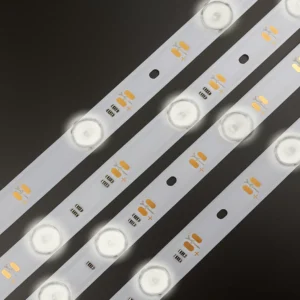
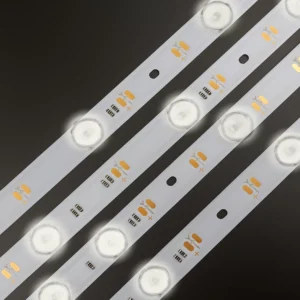
For direct illumination applications, fabricators may also compare different LED technologies such as 3030 Backlit Led Bar Strip Day White (6500K) when selecting the appropriate lighting component.
Retail Displays and Point-of-Sale Branding
Retail displays frequently require custom fabrication because every store can have different dimensions and branding requirements.
Flexible materials can be useful in display construction where curved edges, custom shapes or narrow finishing areas are involved.
Applications may include illuminated logos, product display frames, promotional structures, branded counters, wall displays and point-of-sale units.
In major Saudi commercial environments, including Riyadh Front, Al Olaya, Al Nakheel, Al Malaz and King Fahd Road, retailers may require signage and display systems that combine visual branding with practical fabrication requirements.
The final material selection should be based on the construction method, indoor or outdoor location and expected handling.
Exhibition Stands and Event Displays
Exhibition stands are usually designed around temporary installation, transportation and rapid assembly. Fabricators may work with aluminium profiles, acrylic, PVC foam boards, fabric graphics, LED modules and flexible components.
A long roll of silicone strip can be convenient for companies producing multiple displays because material can be cut to the required lengths for different structures.
Saudi exhibition venues such as Riyadh Front Exhibition & Conference Center and the Riyadh International Convention & Exhibition Center host commercial events where companies invest heavily in branded booths and display structures.
For exhibition fabrication, material should be selected not only for appearance but also for its ability to withstand repeated handling, installation and transportation.
Applications in Hospitality and Commercial Interiors
Hotels, restaurants, cafés and commercial properties frequently use custom signs and illuminated branding to strengthen their visual identity.
Flexible strips can have applications in custom interior fabrication where curved or narrow sections need a suitable finishing material.
For example, a fabricated reception logo may contain curved elements that require a flexible component. Restaurant branding may include custom illuminated lettering, while hospitality interiors may use bespoke display structures.
In areas such as Downtown Riyadh, Jeddah Corniche, Al Khobar and central Dammam, commercial interiors often combine architectural finishes with custom branding.
The correct product should always be selected according to the specific installation environment.
Saudi Climate and Material Selection
Saudi Arabia has significant climatic variation, but many regions experience high temperatures during summer. Coastal areas such as Jeddah and Dammam also experience higher humidity than many inland locations.
For outdoor signage, the environmental suitability of every component should be considered. This includes acrylic, aluminium, sealants, LED modules, electrical connections, power supplies and flexible materials.
A material being flexible does not automatically mean it is suitable for every outdoor application. Fabricators should check technical documentation for temperature limits, UV resistance, weather resistance and other relevant characteristics.
For exterior signage in Riyadh, Jeddah, Dammam or Khobar, the complete sign assembly should be designed for its intended environment.
Cutting and Handling the Silicone Strip
One advantage of roll material is that fabricators can cut sections according to the project requirements.
Before cutting, the required length should be measured carefully. Allowances may be needed for corners, overlaps, joints or installation tolerances depending on the application.
Clean cutting tools can help create more consistent edges. The material should also be handled without excessive stretching or twisting because unnecessary deformation can affect installation accuracy.
For large production projects, creating a repeatable cutting and installation process can reduce material waste and improve consistency between finished signs.
Fixing and Installation Considerations
The appropriate fixing method depends on the surface and intended use. Possible methods may include compatible adhesives, mechanical fixing or integration into a fabricated channel.
Adhesive compatibility is especially important. Not every adhesive is suitable for silicone-based materials, and some adhesives may lose performance under high temperatures or outdoor exposure.
The substrate should be clean and free from dust, oil and loose particles before fixing. Installation should follow the adhesive manufacturer’s preparation and curing requirements.
For outdoor projects, the fixing system should also account for thermal movement and environmental exposure.
Reducing Material Waste
Large signage companies often work on multiple projects simultaneously. Material waste can increase when strips are cut without a clear production plan.
A 250m roll allows businesses to optimize cutting across several jobs. For example, fabrication teams can record required lengths and organize cuts to use remaining sections efficiently.
Inventory tracking can also help identify which projects consume the most material.
Reducing waste does not only control material costs. It can also improve production efficiency by reducing unnecessary handling and disposal.
Common Mistakes to Avoid
One common mistake is selecting a flexible strip solely because its dimensions appear suitable. Material compatibility and intended application are equally important.
Another mistake is stretching the strip during installation. Excessive tension can affect the final position and may create unnecessary stress.
Using an incompatible adhesive is another potential problem. Adhesive performance can vary significantly between silicone and other substrates.
Fabricators should also avoid assuming that indoor and outdoor applications have identical requirements. Outdoor signage requires greater attention to temperature, UV exposure, moisture and mechanical conditions.
Finally, the strip should not be treated as an electrical component unless it is specifically manufactured for that purpose.
Choosing the Right Silicone Strip for Sign Fabrication
Before ordering Silicon Strip 3mm 12mm x 250m, consider the following project factors:
Dimensions: Confirm that 3mm thickness and 12mm width fit the available fabrication space.
Length: Determine whether the 250m roll provides enough material for the production schedule.
Flexibility: Check whether the strip can follow the curves and contours required by the design.
Compatibility: Confirm compatibility with the substrate, adhesive and surrounding materials.
Environment: Determine whether the product is intended for indoor, outdoor or specific environmental conditions.
Fabrication method: Consider cutting, bending, fixing and finishing requirements before beginning production.
This approach helps prevent purchasing a material that is technically the correct size but unsuitable for the actual application.
Who Can Use Silicon Strip 3mm 12mm x 250m?
The product can be relevant to several professional users, including sign manufacturers, advertising companies, LED signage fabricators, exhibition contractors, retail display manufacturers, interior branding companies and commercial fit-out teams.
It can be particularly useful for businesses that require flexible strip material repeatedly rather than occasionally purchasing small quantities.
For larger projects, professional buyers should evaluate the complete technical specification and confirm the required quantity before production.
Applications Across Riyadh, Jeddah, Dammam and Khobar
Saudi Arabia’s major commercial centres provide a broad market for signage and display fabrication.
Riyadh has extensive corporate, retail, hospitality and exhibition activity. Areas such as Al Olaya, King Fahd Road and Al Nakheel contain commercial properties where branded signage and displays are frequently required.
Jeddah has strong retail, hospitality and commercial activity, including developments around major shopping and business districts.
Dammam and Khobar serve commercial and industrial markets where corporate identification, retail signage and facility branding can require custom fabrication.
The material requirements can differ from project to project, so local fabricators should evaluate the actual environment and construction before installation.
Final Considerations
Silicon Strip 3mm 12mm x 250m provides a long-roll, narrow and flexible material option for professional fabrication environments. Its 3mm thickness, 12mm width and 250-metre length can make it practical for businesses handling repeated signage and display projects.
Its potential applications include channel letter fabrication, illuminated logos, light boxes, retail displays, exhibition structures and custom commercial branding. The material should always be selected according to the specific construction rather than assumed to be suitable for every signage application.
For Saudi projects, careful consideration of temperature, humidity, installation method, adhesive compatibility, substrate condition and long-term environmental exposure is particularly important.
When combined with appropriate acrylic, aluminium, LED modules, power supplies and fabrication techniques, the right flexible material can contribute to cleaner production and more consistent finished signage across commercial projects in Saudi Arabia.
Reviews
There are no reviews yet.