
Description
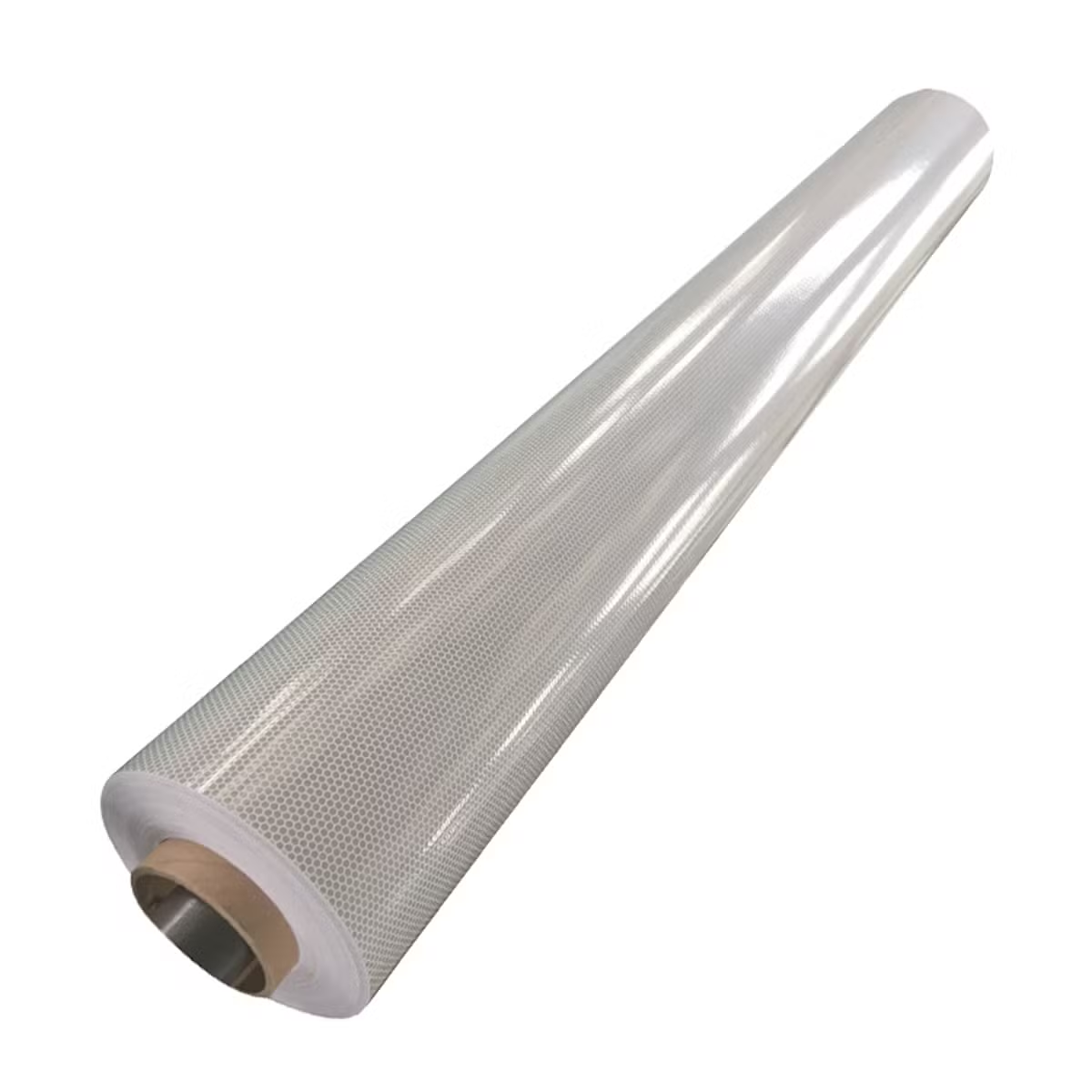
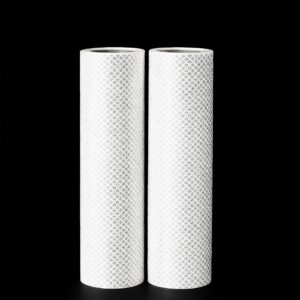
Honeycomb PVC White Reflective for Safety, Traffic and Wayfinding Signage in Saudi Arabia
Honeycomb PVC White Reflective is a specialized reflective signage material designed to improve the visibility of signs when illuminated by headlights or other direct light sources. Its white reflective surface can provide a bright, clean background for text, symbols, arrows, graphics, safety information, and directional communication. This makes reflective PVC useful for road signage, parking signs, construction notices, industrial safety graphics, commercial wayfinding, property identification, and other outdoor applications.
For professional sign makers, printing companies, advertising contractors, construction businesses, facility managers, and commercial property developers in Saudi Arabia, choosing the right reflective material is important. Outdoor signs may face intense sunlight, high temperatures, dust, humidity, vehicle pollution, and frequent cleaning. Honeycomb PVC White Reflective can be considered where both daytime appearance and nighttime visibility are important.
What Is Honeycomb PVC White Reflective?
Honeycomb PVC White Reflective is a reflective PVC-based signage material featuring an optical structure designed to return incoming light toward its source. This retroreflective effect is what makes a reflective sign appear significantly brighter when illuminated by vehicle headlights.
The white colour provides a neutral and highly visible background for printed or applied graphics. It can support black text, coloured symbols, directional arrows, logos, safety icons, numbers, and other sign elements.
The term “honeycomb” generally refers to the structured optical pattern or construction associated with certain reflective materials. However, the exact construction, reflective performance, durability, adhesive system, and recommended applications depend on the particular product. Sign manufacturers should therefore review the current technical specifications before using the material for regulated or safety-critical applications.
How Does Reflective PVC Work?
Reflective signage works through retroreflection rather than ordinary surface reflection. When vehicle headlights strike a reflective surface, the optical structure redirects a significant portion of that light back toward the direction from which it came.
This creates the familiar bright appearance of road and traffic signs at night.
The result depends on several factors, including the viewing angle, distance between the vehicle and sign, angle of illumination, sign position, cleanliness of the surface, surrounding lighting, and quality of the reflective material.
Reflective performance should therefore be considered as part of the complete signage system rather than as an isolated property of the film.
Why White Reflective Material Is Important for Signage
White is one of the most versatile colours for professional signage because it creates a clean background against which text, symbols, and graphics can be clearly displayed.
A white reflective face can be used with dark lettering for strong contrast or combined with coloured graphics for branded and informational signage. It can also provide a consistent appearance across a large wayfinding system.
For example, a commercial property may use white reflective panels with black directional arrows, while a safety system may combine the same background with red, yellow, blue, or green symbols depending on the required communication system.
The final colour combination should always be selected according to the purpose of the sign and any applicable project standards.
Honeycomb PVC White Reflective for Road Signs
Road signage is one of the most important applications for reflective materials. Drivers need to see directional information, warnings, route information, parking instructions, and other signs during both daytime and nighttime travel.
A white reflective background can support highly readable sign layouts when combined with appropriate lettering, symbols, and colour contrast.
Professional sign manufacturers can fabricate reflective panels for roads, access routes, private developments, industrial facilities, commercial properties, and other locations where vehicle navigation is required.
For public-road projects, however, material selection should follow the requirements of the relevant authority and approved project specification. Not every reflective PVC product is automatically suitable for regulated traffic signage.
Reflective PVC for Directional and Wayfinding Signs
Wayfinding helps people and vehicles understand how to move through a property or destination. Large developments may require signs directing visitors toward entrances, exits, parking areas, reception facilities, loading zones, service roads, and specific buildings.
Honeycomb PVC White Reflective can provide a suitable visual background for these signs when nighttime visibility is required.
Wayfinding systems are particularly important for:
- Commercial developments
- Shopping centres
- Hospitals
- Hotels
- Universities
- Industrial facilities
- Warehouses
- Residential communities
- Office complexes
- Exhibition and event venues
- Tourism destinations
The effectiveness of a wayfinding system depends on consistent design. Typography, arrows, icons, colours, sign placement, mounting height, and viewing distance should work together.
Reflective Safety Signage for Industrial Facilities
Industrial environments often involve moving vehicles, forklifts, loading equipment, machinery, and restricted areas. Clear signage helps communicate operational information to employees, visitors, drivers, and contractors.
Reflective PVC can be used for suitable safety signs, hazard identification, vehicle routes, restricted areas, loading zones, parking instructions, and facility identification.
Industrial and logistics areas around Dammam and Al Khobar can have particularly demanding signage environments due to their commercial, manufacturing, energy, and transportation activity.
The sign material should be selected according to the location, expected exposure, cleaning requirements, mounting method, and project specification.
Reflective PVC for Construction Sites
Construction sites are constantly changing. Vehicle entrances, pedestrian routes, temporary parking areas, access restrictions, work zones, and delivery routes may change throughout the construction process.
Temporary reflective signage can help communicate these changes, particularly when construction vehicles and workers operate during early morning, evening, or nighttime hours.
Possible applications include:
- Construction entrance signs
- Site access directions
- Vehicle movement warnings
- Temporary parking signs
- Restricted-area notices
- Pedestrian route information
- Loading and unloading instructions
- Safety warnings
- Contractor identification
In rapidly developing areas of Riyadh, Jeddah, and other Saudi cities, temporary signage can form an important part of construction-site communication.
Reflective Parking and Vehicle Direction Signs
Parking facilities require simple and highly visible information. Drivers may need to identify entrances, exits, reserved areas, visitor parking, service areas, loading zones, and pedestrian crossings.
Reflective white signage can support these requirements, especially where parking areas remain active after sunset.
Shopping centres, hospitals, hotels, residential developments, office buildings, universities, and mixed-use properties can use reflective directional systems to organize vehicle movement.
In large properties, signs should be positioned so that drivers have enough time to read the information and make the required movement safely. The size and contrast of text should therefore be considered according to the viewing distance.
Reflective PVC for Commercial Properties
Reflective materials are not limited to government or road-related signs. Commercial properties can also benefit from reflective identification and directional graphics.
Retail developments may use reflective signs around parking areas and service entrances. Hotels can use them for vehicle access and emergency directions. Office buildings can use reflective signs for parking and building identification. Warehouses can use them around loading bays and internal vehicle routes.
In Riyadh, commercial districts such as Al Olaya, Al Malaz, Al Nakheel, and areas around King Fahd Road contain a variety of developments where professional wayfinding and parking signage can support visitor navigation.
Reflective Signage in Riyadh
Riyadh presents challenging conditions for outdoor signage because of intense sunlight, high temperatures, dust, and prolonged outdoor exposure.
Reflective signage installed in the city should therefore be selected with its actual environment in mind. The adhesive system, substrate, surface preparation, outdoor durability, and cleaning requirements all influence long-term performance.
Commercial and infrastructure projects around Al Olaya, King Fahd Road, Al Malaz, Al Nakheel, and the Diplomatic Quarter may require different signage systems depending on whether the signs serve pedestrians, private vehicles, delivery vehicles, or public traffic.
Reflective Signage in Jeddah
Jeddah’s coastal environment creates different considerations for outdoor signage. Humidity, airborne salt, dust, sunlight, and high temperatures can all contribute to material exposure.
Reflective PVC used in Jeddah should therefore be compatible with the substrate and intended installation environment. Edges and joints should be properly handled, while the sign-support structure should also be suitable for outdoor conditions.
Applications can include commercial parking signs, construction signage, logistics facilities, hotel wayfinding, retail developments, industrial properties, and vehicle identification.
Reflective Signage in Dammam and Al Khobar
Dammam and Al Khobar have extensive commercial, industrial, logistics, and energy-related activity. Outdoor signs in these environments can be exposed to vehicle traffic, dust, industrial contamination, sunlight, and coastal humidity.
Reflective signage can support navigation around warehouses, industrial properties, commercial compounds, loading areas, parking facilities, and service roads.
For larger industrial projects, the signage system should be planned as part of the site’s overall traffic-management and safety communication strategy.
Reflective PVC for Tourism and Visitor Wayfinding
Saudi Arabia’s growing tourism infrastructure has increased the importance of visitor wayfinding. Hotels, cultural destinations, museums, visitor centres, parks, heritage locations, and recreational facilities all require clear navigation.
Reflective white signage can support directional information where visitors may arrive or travel after dark.
A tourism wayfinding system may include:
- Entrance identification
- Parking directions
- Visitor centre information
- Pedestrian routes
- Attraction directions
- Restroom information
- Service-area identification
- Emergency directions
- Exit information
Where bilingual signage is required, Arabic and English typography should be carefully planned so that both languages remain readable at the intended viewing distance.
Honeycomb PVC White Reflective and Emergency Communication
Reflective signage and photoluminescent signage serve related but different purposes.
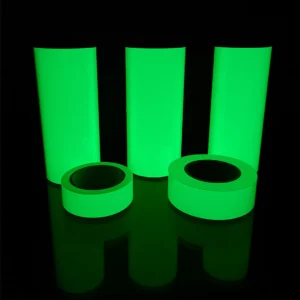
Reflective material becomes highly visible when illuminated by an external light source such as vehicle headlights. Photoluminescent material, by contrast, stores light energy and can emit visible light after the surrounding illumination decreases.
This distinction is important when selecting materials for emergency and safety communication.
For applications where glow-in-the-dark or stored-light visibility is required, Photoluminescent Film Yellow-Green(4h) can be considered as a different signage-material option.
The appropriate material depends on the property’s safety plan, required visibility conditions, installation environment, and applicable regulations.
Reflective PVC vs Photoluminescent Materials
Reflective and photoluminescent materials should not automatically be treated as interchangeable.
Reflective PVC is particularly useful when an external light source illuminates the sign. This makes it highly relevant to roads, parking areas, vehicle routes, and outdoor directional systems.
Photoluminescent materials are designed for applications where the material itself provides a visible glow after exposure to light. They may therefore be relevant to certain emergency routes, stairways, evacuation markings, and safety communication systems.
In some projects, different materials can be used together as part of a broader visual safety strategy.
Reflective PVC and Digital Printing
Some reflective PVC products are designed to support printing or graphic application. This allows sign manufacturers to create customized designs instead of relying only on pre-coloured lettering.
Depending on the exact product, printing may be possible using compatible solvent, eco-solvent, latex, UV, or other printing technologies.
Printer and ink compatibility must always be confirmed before production. Reflective surfaces can behave differently from ordinary PVC vinyl, so correct profiles, curing, drying, and application procedures can be important.
For high-quality production, the sign maker should test the complete combination of printer, ink, reflective material, laminate if required, and substrate before beginning a large project.
Surface Preparation and Application
Correct surface preparation is essential for adhesive-backed reflective materials.
The substrate should generally be clean, dry, smooth, and free from dust, oil, grease, loose paint, oxidation, and other contaminants that could interfere with adhesion.
Application should follow the product manufacturer’s recommendations. Large sheets require careful alignment and controlled pressure to minimize wrinkles, trapped air, bubbles, and stretching.
Temperature can also affect adhesive performance. Installers should follow the recommended application temperature and handling procedures for the specific product.
For large sign panels, professional application can reduce material waste and help create consistent results across multiple signs.
Reflective PVC and Sign Substrates
The reflective sheet is only one component of a finished sign. The supporting substrate also matters.
Depending on the project, reflective material may be incorporated into signage using suitable aluminium panels, composite materials, rigid PVC, or other approved substrates.
The substrate should provide adequate stability for the intended installation. Outdoor signs can experience wind loads, temperature changes, vibration, and mechanical stress.
For large roadside or commercial signs, structural engineering and mounting requirements should be considered separately from the reflective face material.
Designing Effective Reflective Signs
Good reflective signage starts with good information design.
A sign should communicate its most important information quickly. Text should be large enough for the intended viewing distance, while arrows and symbols should be recognizable without unnecessary visual complexity.
Designers should also consider:
- Contrast between background and graphics
- Arabic and English text hierarchy
- Letter height
- Stroke width
- Arrow size
- Viewing distance
- Sign mounting height
- Illumination conditions
- Driver approach direction
- Surrounding visual clutter
Reflectivity cannot compensate for an overcrowded or poorly designed sign.
Maintenance of Honeycomb PVC White Reflective
Outdoor reflective signs should be inspected regularly. Dust, dirt, mud, pollution, scratches, physical damage, or damaged edges can affect appearance and visibility.
Cleaning should follow the manufacturer’s recommended methods. Abrasive tools and aggressive chemicals may damage the reflective surface.
For signs used in traffic, industrial, or safety applications, inspections should also check the supporting structure, mounting hardware, corrosion, cracks, peeling, and other physical issues.
If a sign no longer provides clear information or its reflective performance has significantly deteriorated, replacement should be considered according to the relevant maintenance requirements.
How to Choose Reflective PVC for a Saudi Project
The correct material depends on the intended application rather than simply the colour or appearance.
Before purchasing Honeycomb PVC White Reflective, sign manufacturers should consider:
- Required reflective performance
- Application type
- Indoor or outdoor installation
- Viewing distance
- Printing requirements
- Cutting requirements
- Substrate compatibility
- Adhesive characteristics
- Temperature exposure
- Humidity and environmental conditions
- Expected service life
- Cleaning requirements
- Applicable project standards
For regulated road, traffic, or safety applications, the project specification and relevant authority requirements should always be checked before material selection.
Why Honeycomb PVC White Reflective Matters for Sign Makers
Honeycomb PVC White Reflective provides a versatile foundation for professional reflective signage. Its white appearance can accommodate clear typography, symbols, arrows, colour graphics, and customized visual communication, while its reflective construction can improve nighttime visibility when illuminated by headlights.
For Saudi sign manufacturers, the material can support applications across road signage, parking systems, industrial safety, construction sites, commercial properties, logistics facilities, tourism wayfinding, and outdoor directional communication.
The strongest results come from treating reflective PVC as part of a complete signage system. Correct material selection, artwork, substrate, printing, surface preparation, application, installation, and maintenance all contribute to the performance of the finished sign.
Whether a project is located in Riyadh, Jeddah, Dammam, Al Khobar, or another Saudi location, environmental conditions and project requirements should guide the final material choice. Reviewing the manufacturer’s technical documentation before fabrication helps ensure that the selected reflective material is appropriate for the intended application and expected service conditions.
Reviews
There are no reviews yet.